

What Are the Best Waste Management Services for Restaurants?
Running a restaurant comes with constant pressure. Your team is moving fast, your kitchen never stops, and every day brings something new to manage. In the midst of it all, waste is one of the things that may seem insignificant until it suddenly causes bigger problems. When trash piles up, grease traps clog or used cooking oil is mishandled, it can slow down service, create safety hazards and lead to costly fines.
Below, we’ll explore what the best waste management services for restaurants are and show how the right mix of services can make your kitchen cleaner, safer and more efficient.
Understanding Restaurant Waste
To make informed decisions about waste management, it is helpful to understand the magnitude of the issue. Restaurants need to prepare enough food to satisfy customers, but too often, that leads to waste. Studies have shown that restaurants and similar establishments are responsible for 34% of all food wasted at the consumption stage.
This number doesn’t include cooking oil, grease buildup, packaging waste, broken glass or animal by-products. It also excludes the environmental stress caused when used cooking oil goes down the drain or when grease traps are not maintained properly.
Why a Waste Management Plan Matters for Restaurants
A clear waste plan helps you avoid small problems that can quickly grow into bigger challenges. It is about keeping the kitchen tidy while also staying safe, compliant and efficient.
The following are key benefits of having a structured waste plan:
- Improved compliance: Adhering to waste regulations helps you avoid fines and supports a healthy work environment.
- Fewer plumbing issues: Consistent grease trap service helps prevent blockages and unexpected downtime.
- Better environmental impact: Responsible handling of grease, food scraps and recyclables supports more sustainable operations.
- Stronger customer perception: Research indicates that consumers are willing to pay more for sustainable products, so demonstrating that your restaurant prioritizes sustainability can help enhance customer perception.
How Restaurants Should Approach Waste Management
Restaurant waste is not one problem. It is a combination of very different waste streams, each requiring its own handling and service provider.
A complete restaurant waste plan typically includes general trash hauling, recycling, organic waste services, used cooking oil collection, grease trap pumping and in some cases, rendering for animal by-products.
3 Key Waste Management Services for Restaurants
Once you know your waste types, choosing the right services becomes easier. A comprehensive solution typically encompasses a combination of general waste hauling and specialized handling of grease and by-products.
1. Waste Hauling and Recycling Services
These companies handle everyday trash and recyclables. They provide the following:
- Dumpsters in various sizes
- Routine pickups
- Cardboard recycling solutions
- Optional compacting equipment
2. Composting Services for Food Scraps
Not every city offers commercial composting, but composting can be helpful when offered. It supports sustainability goals and can help reduce costs for high-volume kitchens that generate significant prep waste. Collected organics are taken to facilities where they break down naturally.
3. Integrated Grease Management Services
This is where restaurants benefit from a specialized partner. Traditional haulers can’t handle grease and animal by-products. They require licensed collection and recycling providers who are trained in the proper handling of fats, oils and grease (FOG).
Grease management includes three major services:
- Used cooking oil collection: Professional collection prevents clogged drains, environmental damage and costly penalties.
- Grease trap and interceptor pumping: Traps and interceptors help prevent grease from entering sewer systems. A pumping service removes water, solids and grease and cleans the system.
- Rendering for animal by-products: Facilities that work with meat, such as butcheries or restaurants, generate animal by-products. Rendering services collect materials such as bones, trimmed fat and expired meat.
How to Choose the Right Waste Service Partner
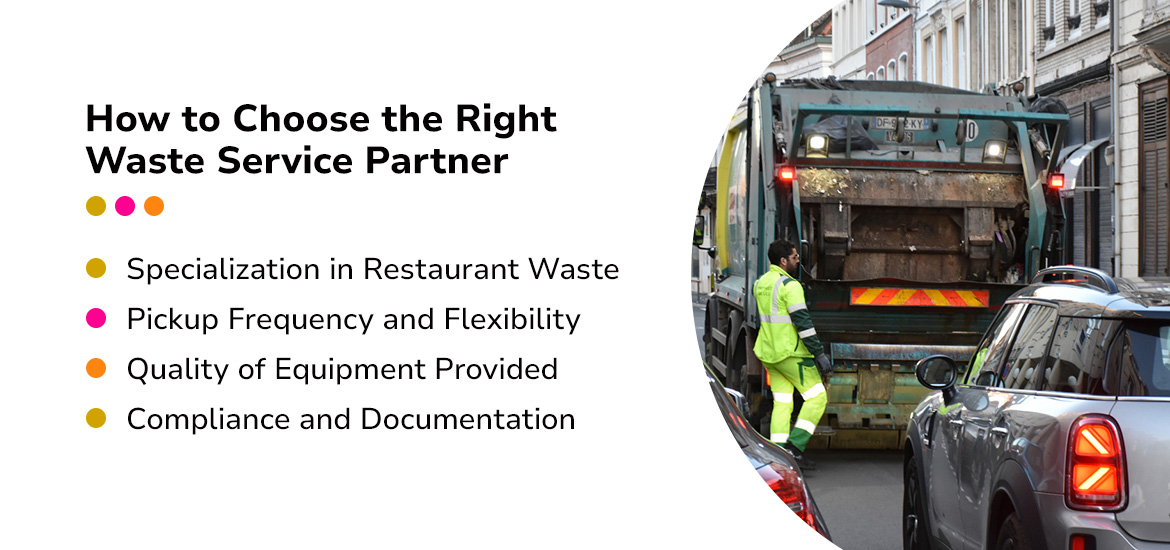
Finding the right partner helps keep your kitchen running smoothly and safely.
Specialization in Restaurant Waste
Restaurant waste is different from regular commercial waste. Some trash companies may not be equipped to handle grease or animal by-products. Select partners who understand food service environments and your unique waste management requirements.
Pickup Frequency and Flexibility
Your volume might vary from weekdays to weekends. It’s essential to select a partner whose pickups align with your busiest days to help keep your kitchen cleaner. Additionally, flexible partners who can adjust their schedules or provide emergency support when needed can be invaluable to your business.
Quality of Equipment Provided
Well-designed containers can help improve safety and organization. For restaurant kitchens, this may include looking for a partner who can offer the following:
- Secure indoor tanks to reduce spills and control odors.
- Outdoor containment bins that provide storage for high-volume operations.
- Pipe locks to help prevent theft of used cooking oil.
Compliance and Documentation
Inspections are part of restaurant life. For example, grease systems require proper documentation for inspectors. Vendors who provide adequate documentation and service records make it easier to stay compliant.
Frequently Asked Questions
Get your pressing questions on waste management services for restaurants answered.
1. What Are the Best Waste Management Services for Restaurants?
The best services depend on your waste streams. Most restaurants need a combination of trash hauling, recycling, composting where available, used cooking oil collection, grease trap pumping and, in some cases, rendering for animal by-products.
2. How Often Should Restaurants Pump Grease Traps?
Frequency depends on your volume and the size of your trap or interceptor. Many restaurants may schedule monthly, bimonthly or quarterly service, while smaller traps in cafes or bakeries may require more frequent pumping.
3. How Can Restaurants Stay Compliant With Waste Regulations?
Compliance involves maintaining clean grease traps, storing used cooking oil properly and organizing service documentation. Partnering with vendors who understand food service requirements can also help you stay compliant.
4. Do Restaurants Need Separate Services for Used Cooking Oil and Grease Traps?
Yes. Used cooking oil collection and grease trap pumping are two distinct processes that are handled by different types of equipment. Cooking oil is stored in a recycling tank and collected for rendering, while grease traps are plumbing devices that require pumping to remove solids, water and grease that accumulate during dishwashing.
Simplify Your Grease Management With Baker Commodities
Waste management can feel overwhelming, especially when your team is already stretched thin. The good news is you don’t have to manage the most complicated parts alone.
Baker Commodities is carbon negative and supports restaurants with expert management of fats, oils, grease and animal by-products. We offer Total Grease Management® services, which include trap servicing, oil collection, drain maintenance and equipment support into one coordinated program. If you’re trying to determine what the best waste management services for restaurants are, partnering with a dedicated FOG expert can help your business stay compliant, protected and supported every day.
Contact us today to create a clean, safe and compliant grease management plan tailored to your restaurant.