

What Are the Different Ways to Dispose of Cooking Oil for a Restaurant?
Improper cooking oil disposal can lead to a range of environmental issues, expensive plumbing repair work and reputational damage to your restaurant. From polluting waterways to causing clogs and costly repairs, putting cooking oil down the drain leads to significant problems.
This guide explains how proper cooking oil disposal benefits the environment, while also delivering cost-effective solutions and enhancing your reputation as a sustainable business.
4 Cooking Oil Waste Disposal Methods
The vast amount of mishandled or non-recycled cooking oil from restaurants can become a significant issue. Here are four practical ways to solve the problem.
1. Recycle Through a Licensed Rendering Company
Hiring a rendering company to collect used cooking oil from your restaurant is affordable and sustainable. These companies repurpose oil into products like soap, organic detergents and paint.
By adopting a closed-loop recycling approach, you support a circular economy, limit the risk of harm to wildlife and protect the environment.
2. Professional Used Cooking Oil Collection Services
Disposing of cooking oil might fall to the bottom of your to-do list when managing a busy kitchen, potentially resulting in unpleasant smells and overflowing containers.
Luckily, some companies collect used cooking oil and provide all the necessary equipment, including indoor contaminant tanks, leakproof containers and piper locks to prevent theft. A reputable collection service will work with you to tailor a schedule to your specific volume.
3. Safely Reuse the Cooking Oil
Sometimes, you can reuse cooking oil if you filter it with proper techniques and maintain safety standards. However, chemical reactions like oxidation degrade cooking oil every time you reheat it. Continuing reuse will affect its quality and potentially lead to health issues, including non-communicable diseases like cardiovascular diseases and diabetes.
4. Biofuel Conversion
Converting used cooking oil into renewable diesel or biodiesel contributes to a cleaner environment by reducing greenhouse gas emissions.
Much like transforming cooking oil into renewable products, biofuel conversion also supports a circular economy. The conversion process creates sustainable energy and reduces the need for fossil fuels.
What Happens to Used Cooking Oil From Restaurants?
Before turning used cooking oil into sustainable products and biofuels, an oil collection service follows specific steps.
- Safe storage and collection: The business safely collects oil in leakproof containers, such as drums or barrels.
- Transporting oil containers: The company transports used oil from your restaurant to a refining facility.
- Filtration and dehydration: Filtering and dehydrating the cooking oil safely removes water, debris and food particles.
- Refining the oil: Further refining involves separating remaining fine particles and processed fats.
What Not to Do With Cooking Oil
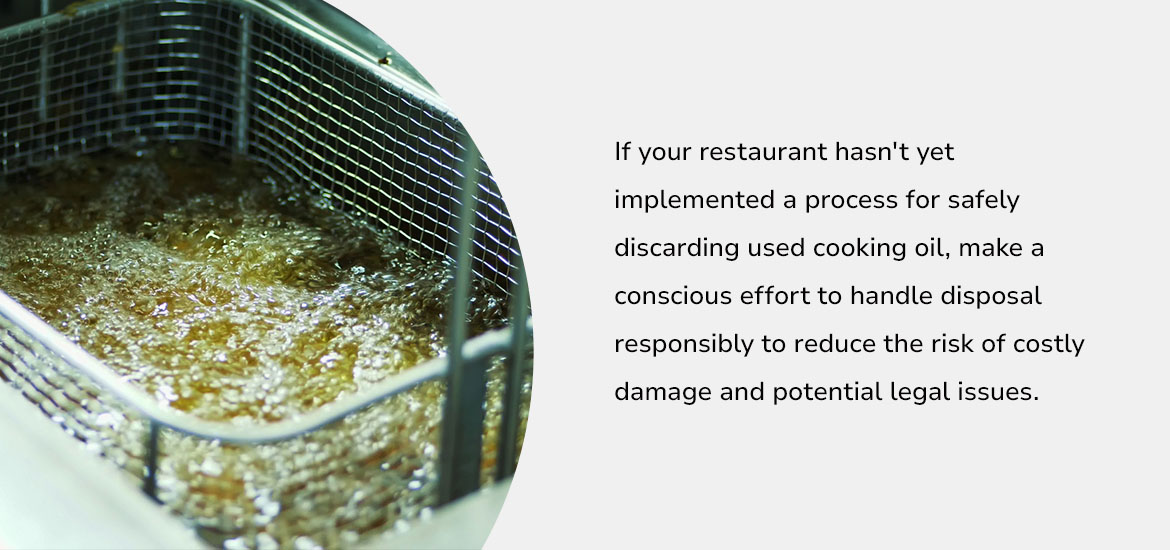
If your restaurant hasn’t yet implemented a process for safely discarding used cooking oil, make a conscious effort to handle disposal responsibly to reduce the risk of costly damage and potential legal issues. Never do these things with used cooking oil.
- Pour it down sinks and drains: Tipping cooking oil down sinks or floor drains is a hazardous practice, as it can clog plumbing pipes and damage sewer lines.
- Throw it away: Disposing of oil with regular garbage and food scraps can lead to pest issues and potentially violate sanitation regulations.
- Use unsuitable containers: By using containers without proper sealing, you increase the risk of contamination, spills and rancid odors.
- Partner with unreliable collectors: Research oil collection services to ensure they are reputable, with a track record of relevant experience.
Though states have different rules for disposing of and storing cooking oil, they all strictly prohibit improper cooking oil disposal, such as pouring it down drains and into wildlife habitats.
Choosing the Best Restaurant Oil Disposal Partner
Selecting a trustworthy cooking oil collection service is essential to maintain compliance and prevent costly mistakes. A reputable partner should protect your restaurant from environmental and health violations, while also alleviating the pressure of managing compliant oil disposal. Here are the qualities to look for in a cooking oil disposal partner.
- Correct licensing and compliance: Your service provider must hold the proper authority to collect, recycle and transport used cooking oil in full compliance with regulations.
- Quality oil collection tools: Choose a partner that supplies leakproof, durable containers to keep your kitchen safe and minimize disruption.
- Convenience: A reliable service should manage the entire process, including storage and paperwork, so you can stay focused on daily operations.
- Reliable scheduling: Establishing a dependable pickup schedule will maintain a clean, efficient and hazard‑free environment.
- Affordability: Work with a provider that offers fair pricing to keep expenses manageable while helping you avoid plumbing repairs and fines.
- Experience and proven track record: Select a company with a proven track record serving restaurants and ensure they understand your unique needs.
- Solid protection against theft: Because used cooking oil can be valuable, your partner should implement secure containers and monitoring processes to safeguard against theft.
Why Baker Commodities Is a Trusted Recycling Partner
Baker Commodities’ dedicated team of food waste management experts has more than 80 years of experience in safely and effectively handling cooking oil. Our experts comply with regulations and provide top-quality equipment to help you contain used cooking oil, ready for collection.
Our team repurposes cooking oil into other useful products, including biodiesel and tallow. We also offer Total Grease Management®, which includes collection, preventive maintenance and drain cleaning solutions.
Partner with us to responsibly recycle your used cooking oil. Contact our team today to learn more about us and find services in your area.