

The Restaurant Owner’s Guide to Preventing UCO Contamination and Maximizing Rebate Potential
High-quality used cooking oil isn’t necessarily landfill-bound — it’s a valuable resource when handled correctly. Food service businesses can turn UCO into a sustainable revenue source by recycling it for feedstocks and renewable fuels. However, contamination from food particles or improper storage can quickly reduce its rebate potential.
Understanding what impacts UCO quality and how to maintain it will help your restaurant avoid contamination, maximize used cooking oil rebates, support eco-friendly initiatives and maximize every drop.
The Economics of Used Cooking Oil
UCO can command a high price in today’s sustainability-driven economy. As the demand for renewable fuels and eco-friendly products increases, restaurants and food service operators can turn their used oil into a consistent revenue stream. Understanding what influences UCO’s market value and how oil gets repurposed into new products is essential for maximizing financial and environmental returns.
UCO Market Value
The big-picture view of the global used cooking oil market places its value at around $8 billion in 2024 — rising to $12 billion by 2030 — with a compound annual growth rate of 7% between 2025 and 2030. This market growth is due to several factors.
- Increasing awareness of the value of waste cooking oil
- Significant growth in biofuel production
- Focus on the use of renewable energy sources and used cooking oil recycling
Cooking oil rebates are compensation from a collection services company, typically paid per pound. Prices change continuously depending on:
- Oil quality
- Presence of contaminants
- Regional market dynamics, like transportation costs and local competition among recyclers
High-quality, uncontaminated oil consistently commands the best rates, making proper handling and storage essential for maximizing returns.
How UCO Becomes Other Products
After collecting used cooking oil, processors take it to specialized facilities for filtering and purification. Clean oil can become biodiesel — a renewable, cleaner-burning alternative to traditional diesel fuel.
Beyond biodiesel, refining high-quality UCO into animal feed additives and industrial lubricants is possible if it meets strict purity guidelines. Oil contaminated with water, food scraps or chemicals has lower value, and processors may downgrade or reject it. That’s why it’s critical to maintain strict standards during collection and storage.
Quality Standards That Determine Your Rebate
Recyclers look for purity when evaluating used cooking oil. They are more likely to accept clean, well-handled oil to convert into products like fuel, livestock food additives or lubricants. You can maximize your financial gains by ensuring your UCO is contaminant-free and following the criteria processors use to evaluate each batch.
What Is MIU?
MIU stands for moisture, impurities and unsaponifiables — the combined percentage of water, food particles and other non-oil substances present in used cooking oil. Restaurants and food service operators who want to receive the highest possible rebates must keep MIU levels as low as possible.
Free Fatty Acid Requirements
Free fatty acid content is another critical quality metric. FFA levels reflect the amount of oil breakdown during cooking. Higher FFA levels indicate overused or degraded oil, which is less efficient to process.
UCO Quality and Rebates
There is a direct relationship between UCO quality and the rebate you receive. Cleaner, well-maintained oil results in higher rebates, while contaminated or degraded oil may get downgraded or rejected. Maintaining high oil handling and storage standards will net you more profits from your used cooking oil.
Maximizing Your Rebate Potential
Take advantage of Baker Commodities’ easy-to-understand service documents to track your used cooking oil yields, monitor for contamination and spot trends over time. With our detailed reporting, you can:
- View UCO volumes, collection dates and rebate payments at a glance.
- See how menu changes or seasonal shifts impact your oil output and quality.
- Identify recurring contamination issues and opportunities to improve your oil management.
- Calculate your return on investment by factoring in reduced oil purchases, lower waste disposal costs and time saved with our efficient systems.
Our transparent documentation makes it simple to maximize your rebate potential and keep your operation running smoothly.
Contamination Sources in Restaurant Kitchens
Contamination is the No. 1 reason restaurants lose out on UCO rebates. You must find and control physical, chemical and operational contaminants to protect your bottom line and stay compliant.
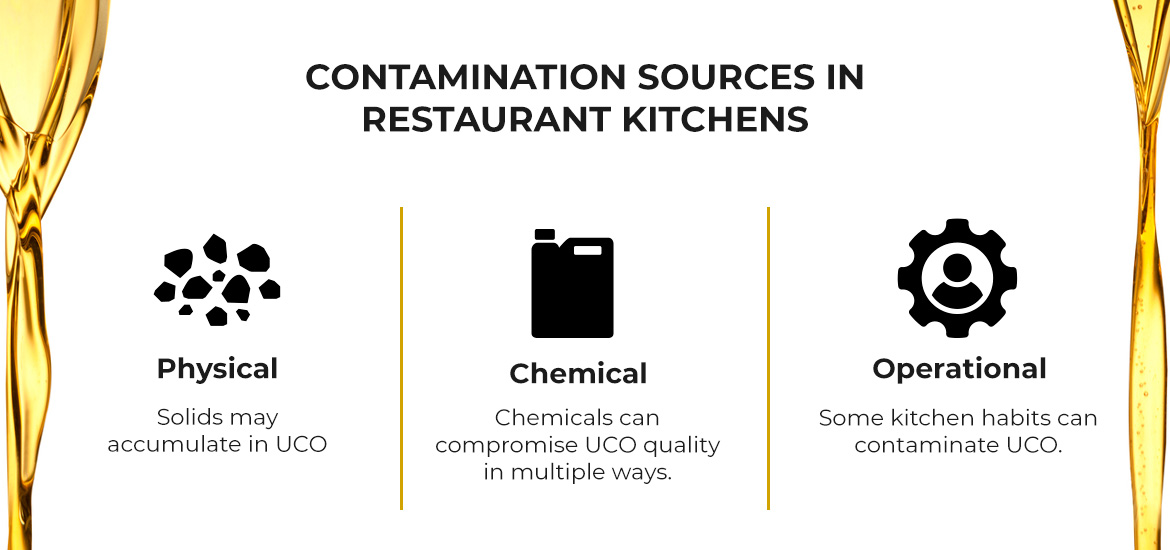
Physical
Solids may accumulate in UCO. Common physical contaminants in restaurant kitchens include:
- Remnants of food particles left in the oil
- Droppings, fur or insects getting into oil during storage or collection
- Hair, fingernails or dirt from unwashed hands or produce
- Metal shavings, plastic pieces or glass shards from broken items
- Airborne dust that accumulates in the kitchen environment
Chemical
Chemicals can compromise UCO quality in multiple ways:
- Soap and degreasers are toxic to biodiesel production — never let them enter UCO bins.
- Water from fryer cleaning or condensation increases MIU and can spoil entire batches.
- Salt accelerates oil breakdown and can corrode storage equipment.
- Do not dump non-food chemicals into UCO containers.
Operational
Some kitchen habits can contaminate UCO:
- Overused oil has higher FFA and a lower value.
- Inconsistent oil changes lead to unpredictable quality.
- Grease trap contents contain water, food and cleaning chemicals — never mix with UCO.
Contamination Prevention Strategies
A proactive contamination prevention system is your best defense against lost rebates and compliance headaches. Equipment, procedures and training make all the difference.
Use dedicated, food-grade and clearly labeled containers for used cooking oil and store them indoors or in secure, climate-controlled areas. Install locks, pipe locks and surveillance where possible to deter theft and unauthorized dumping. While removing solids from used oil is helpful, avoid overusing filtration systems to extend oil life — this can adversely affect food quality and the value of your recycled oil. For the best results and maximum rebates, regularly change fryer oil and keep your used oil as clean as possible.
Define specific steps for oil collection, filtration, transfer and storage. Regularly train staff on contamination risks and proper procedures — use checklists for accountability. Maintain logs of oil changes, filtration and restaurant UCO collection to track quality and compliance. Routinely clean and inspect fryers, oil filtration and storage containers.
Baker Commodities’ Role in the Recycling Process
Baker Commodities is a linchpin of the UCO recycling ecosystem. We offer grease management and secure restaurant UCO collection services, advanced testing and state-of-the-art processing to ensure used cooking oil meets or exceeds industry recycling standards.
By offering specialized equipment and expert guidance, we help our clients prevent contamination and maintain oil quality from the kitchen to the recycling facility. This comprehensive approach maximizes your rebate potential and supports broader sustainability goals by converting UCO into valuable, eco-friendly products.
Are you ready to turn your used cooking oil into a reliable revenue stream? Partner with Baker Commodities for expert collection, secure equipment and industry-leading rebate programs. Contact us today to schedule a free consultation and discover how easy it is to get higher returns with Total Grease Management®!